Why a Digital Card With Photos Feels Personal
Create a digital card with photos that feels personal, polished, and private, with room for your words, memories, music, and the right moment to share.
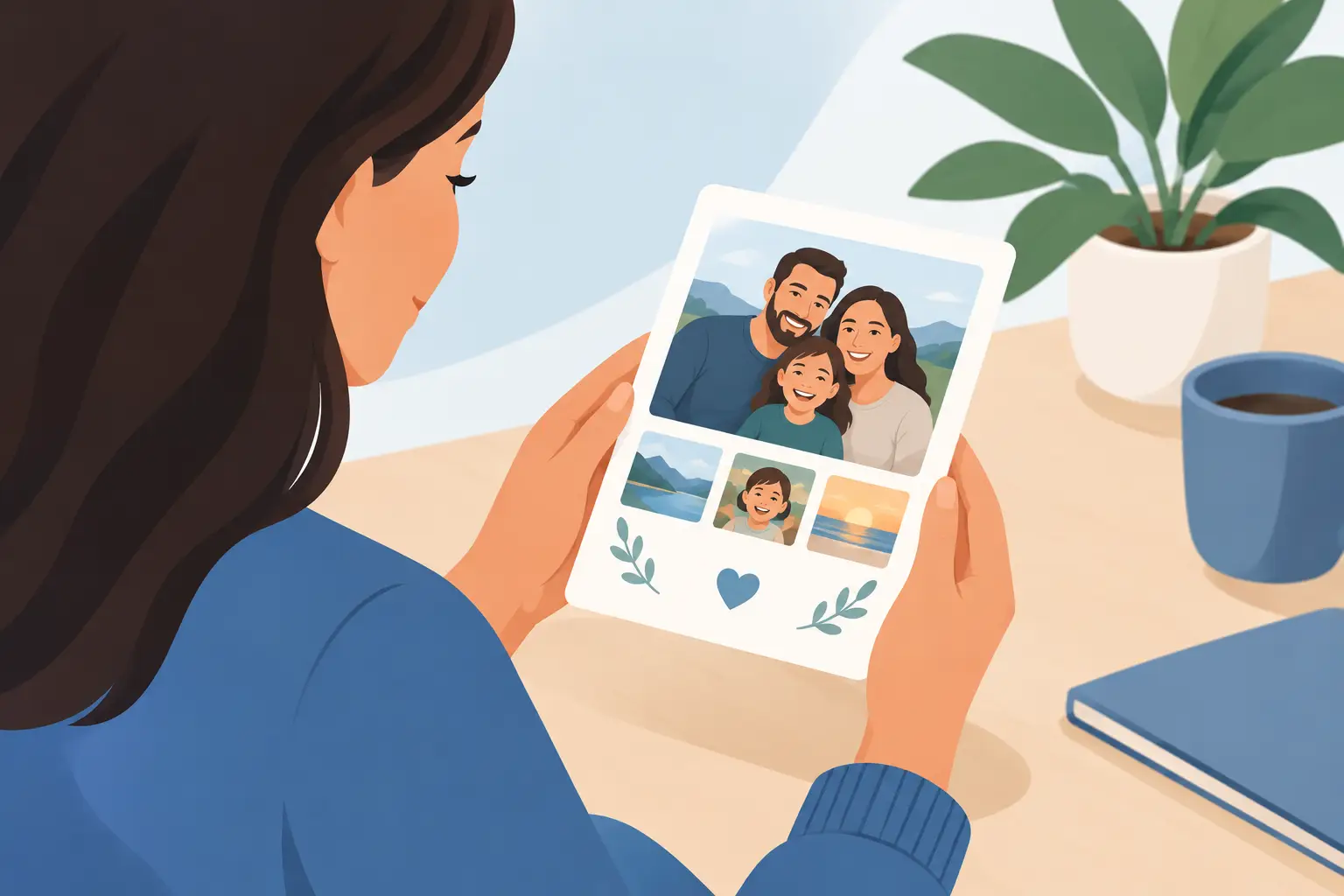
A digital card with photos can do something a quick text rarely can: it can hold a moment still. The laugh from last weekend. The blurry snapshot from a first trip together. The picture you took because the light fell perfectly across someone you love. Paired with a few honest words, those images become more than decoration. They become proof that you noticed.
For birthdays, anniversaries, encouragement, thank-yous, and quiet reconnections, a photo card offers a thoughtful middle ground. It is more considered than a message thread, yet it arrives in time for the moment that matters.
What a Digital Card With Photos Can Hold
A good photo card does not need to tell the whole story of a relationship. In fact, trying to include every memory can make it feel less intimate. The strongest cards usually choose one feeling: gratitude for a friend who showed up, warmth after a family visit, anticipation before a new chapter, or affection without a particular occasion.
Photos give your words a setting. If you write, “I am so glad you are in my life,” an image of the two of you cooking in a tiny kitchen or standing in the rain after a concert makes the sentence land differently. It brings the recipient back to a shared place.
That is especially meaningful when you cannot be there in person. Maybe your sister has moved across the country. Maybe a coworker is leaving the team. Maybe your partner is traveling, or a friend is having a difficult week and you do not know exactly what to say. A card gives the message a small sense of ceremony. It says, “I made room for this.”
There is also a practical pleasure to it. Physical cards are lovely, but they require a store, a stamp, an address, and time in the mail. A digital card can be made when the thought is still fresh, then shared privately by a link or WhatsApp. The ease should not make the gesture feel smaller. Used well, it makes care more possible on ordinary days.
Choose Photos That Carry a Feeling
The best image is not always the most polished one. A formal portrait may be right for a milestone birthday or graduation, but a candid photo often feels more alive. Look for images that evoke a specific shared memory rather than simply showing a face.
One photo can be enough. A single image leaves breathing room for your message and suits a simple, editorial card design. Several photos can create a small visual story: the coffee shop where you met, a view from a weekend away, a close-up of a birthday cake, and the happy blur of everyone around the table.
More is not automatically better. If each image says something different, the card can begin to feel like an album rather than a note. For a personal digital card, choose photos with a common thread. They might share a place, a season, a person, or a mood.
Before adding an image, ask a gentle question: will this make them feel seen? A photo may be beautiful but still belong to a memory they would rather keep private. This matters with sensitive life changes, breakups, grief, or family events. Thoughtfulness includes knowing what not to include.
Let the Message Lead
Photos create atmosphere, but your words are the center of the card. You do not need to write a long letter. A few specific sentences are often more moving than a page of general praise.
Instead of writing, “Hope you have the best birthday,” try naming what you appreciate: “You make every room feel more generous. I hope this next year brings you some of that same care back.” Instead of “Thinking of you,” you might say, “I saw this photo and remembered how safe I felt laughing with you that day. I hope today is gentle.”
Specificity does not mean pressure. You are not required to explain the entire history of a relationship or find perfect language for a complicated feeling. Say what is true, in the way you would say it out loud. A card should sound like you on a particularly attentive day.
For romance, restraint can be especially powerful. A line such as “I still like finding ordinary days with you” can feel more intimate than a grand declaration. For a friend, “Thank you for answering when I called” may mean more than a long list of compliments.
How to Make a Digital Card With Photos Feel Designed
Design is not about making every element loud. It is about helping the recipient notice what matters first. Start with a card style that matches the feeling you want to send. Soft watercolor can suit encouragement or a new baby. A botanical design can feel warm for gratitude. A darker, minimal style may give a romantic note or a milestone message more weight.
Then let the image and text share the space. If the photo is detailed or colorful, choose a calmer design and keep the message concise. If the image is quiet, such as a pale sky or a favorite corner of home, it can support a few more lines of writing. Read the card once from the recipient’s point of view. Does your eye know where to rest? Does the message remain easy to read?
A digital card is not a social post. You do not need captions, stickers, filters, or a crowded collage to make it meaningful. A little restraint leaves room for emotion. This is where refined stationery has an advantage: the design supports the memory instead of competing with it.
If you want the card to feel like a keepsake, consider a format that lets the recipient save it after opening. A downloadable file gives the gesture a longer life, particularly for anniversaries, weddings, new beginnings, or a note you hope they return to later.
Add Music Only When It Adds Something
A song can turn a card into a small private experience. It can bring back the drive home after a first date, the track that played all summer, or the melody a parent always had on in the kitchen. But music is personal, and it works best when it has a reason to be there.
Choose a song that belongs to the two of you, or one that quietly supports the message. A favorite song can be beautiful for a partner’s birthday, a long-distance note, or an invitation to reconnect. It may be less fitting for a professional thank-you or a card meant for a large group.
The same principle applies to the number of photos. Premium options such as up to six images, music, downloadable keepsake files, and optional PIN protection are valuable when they deepen the experience. They are not a requirement for every message. Sometimes one picture and two sincere sentences are exactly enough.
Keep the Sharing Personal
How a card arrives affects how it feels. Sending a private link directly creates a small pause in someone’s day. A simple message alongside it works well: “Made this for you,” “Open when you have a quiet minute,” or “A little something from our weekend.”
Privacy matters when the card includes family photos, romantic memories, children, or vulnerable words. If you would not want the contents forwarded without context, choose a service that gives you control over sharing and consider PIN protection. The card can still be easy to open while remaining meant for one person.
WishRise is designed around that kind of private gesture. Cards can be created without an account, while individual Premium cards cost CHF 1.99 and offer added photos, music, downloadable files, and optional PIN protection. There is no subscription waiting behind a thoughtful moment.
Make Room for the Ordinary Occasion
The most memorable cards are not always sent on calendar holidays. They appear after a hard conversation, before a job interview, on the first day in a new apartment, or when a friend has been quietly carrying a lot. A photo card gives you a way to acknowledge those moments without making them bigger than they need to be.
You might send a picture from a recent walk with the note, “I liked this afternoon more than I said at the time.” Or share an old vacation photo with, “I miss having no plans with you.” These messages do not need an occasion because the relationship is the occasion.
Choose one image that means something, write the sentence you would want to receive, and send it while the feeling is still near. That small act of attention may stay with someone longer than you expect.